Buying Land in Montana: What You Need to Know Before You Purchase
Most Montana land mistakes are not made at the closing table. They are made three weeks earlier, when a buyer falls in love with a property nobody told them was landlocked, junior on water, or sitting in a flood zone the listing photos somehow avoided.
The land itself is rarely the problem. The decision process is. Buyers coming from out of state apply the evaluation habits that worked in suburban markets, where the relevant variables are bedrooms, finishes, and comparable sales. Montana land does not behave that way. A parcel can be beautiful, affordable, and effectively unusable. Another parcel can look unremarkable and be worth twice what it is listed for, because the water rights attached to it are senior and the access is recorded.
Knowing the difference is the work. Most of what follows is what gets checked before a client of mine gets attached to anything.
Why does Montana land require a different evaluation than residential property?
Because the things that make Montana land valuable, and the things that make it functionally worthless, do not show up in listing photos.
A residential home in a developed market has its biggest variables already resolved. Access exists. Water and power are connected. Zoning permits the use. The buyer is choosing among finishes, layouts, and locations within a system that already works.
Montana land is not inside that system. Each parcel is its own question:
- Does it have legal access, or just a road
- Does it have water rights, or just a creek running through it
- Is it buildable, or is it scenic ground that drains the wrong way for a septic system
The answers to those questions determine whether the land does what you want it to do, and the answers are not in the MLS listing.
This is the gap most out-of-state buyers fall into. The listing looks complete. The price seems reasonable. The county is the one they have been researching. Everything that is visible looks fine. But the variables that actually determine whether the land is worth owning are not visible from a listing or a drive-by, and discovering them after closing is the kind of mistake that takes years to unwind.
What are the most important factors when buying land in Montana?
Five factors determine whether a parcel is worth owning, in this order:
- Water rights
- Legal access
- Terrain and buildability
- Zoning and covenants
- Infrastructure cost
Every other consideration sits underneath these five.
Water rights
Water comes first because Montana operates under prior appropriation, which means water and land are legally separate and water is allocated by priority date. A senior water right with an older priority date takes precedence over a junior right when the water is short.
Buying a parcel without confirmed, transferable water rights, or buying a parcel with junior rights you did not understand were junior, is the mistake with the longest tail. Properties without reliable water access are harder to use, harder to insure, and harder to sell.
The water situation needs to be confirmed in writing through DNRC records before an offer is written, not after.
Legal access
A property with a road on Google Maps does not have access. A property with a recorded, deeded right of way from a public road has access. The distinction sounds technical and it costs people houses.
Some Montana parcels rely on informal arrangements with neighboring landowners that have worked for thirty years and can be revoked in a phone call. Others have legal access on paper but the road is seasonal and the deed does not specify maintenance obligations.
Confirm access through the county recorder, not through a conversation with the listing agent.
Terrain and buildability
Steep slopes, rocky soil, poor drainage, and FEMA flood designations can disqualify a parcel as a build site regardless of how the listing photos make it look. The listing will tell you the parcel is twenty acres. A proper land survey handles the boundary and easement questions. It will not tell you that three of those acres are usable and the rest is grade.
Any parcel being purchased with the intention of building needs three things checked before the offer is written:
- A site walk to identify usable flat ground and drainage patterns
- A soil read for septic feasibility
- A FEMA flood map check for the parcel
Zoning and covenants
Rural does not mean unrestricted. Park County and the municipalities within it have zoning regulations, and many subdivisions add private covenants on top.
Common restrictions include:
- Building size and setbacks
- Livestock and outbuildings
- Short-term rentals
- Further subdivision of the parcel
The covenants are recorded and findable. They need to be read before the offer goes in, because a parcel that does not allow what you want to do with it is the wrong parcel regardless of how good it looks.
Infrastructure cost
This is the number most buyers underestimate by the largest margin. The per-acre price tells you what the land costs. It does not tell you what it costs to make the land functional.
Typical infrastructure costs on raw Park County land:
- Drilled well: $8,000 to $30,000 depending on depth and geology
- Permitted septic system: $10,000 to $25,000 depending on site conditions
- Electrical service from the nearest line: tens of thousands depending on distance
- Gravel road to the build site: several thousand dollars per mile
The depth of the well is not knowable until it is drilled. The distance to the electrical line is. None of these costs are unusual. They are the cost of making a parcel functional, and they belong in the purchase math from the beginning.
What types of land are available in Montana, and how does that change what you should look for?
The same parcel can be a strong buy or a poor buy depending on what you intend to do with it. Three categories cover most of what you’ll see listed in Park County and surrounding areas.
Recreational land
Bought for hunting, fishing, and seasonal use. Minimal infrastructure is acceptable. Limited or seasonal access is acceptable. The evaluation priorities shift toward wildlife habitat, water features, adjacency to public land, and quality of the recreational use the parcel supports.
A recreational parcel does not need to be buildable. It does not need year-round access. The mistake on this category is overpaying for amenities the parcel will not use.
Residential land
Bought to build a home, primary or seasonal. This is the category where evaluation matters most, because the gap between a listing price and a fully developed, livable property can be enormous depending on what infrastructure is missing.
A residential parcel needs all five factors from the previous section to line up. Water that is reliable and transferable. Access that is legal and year-round. Terrain that is buildable. Zoning that permits the structure you want. Infrastructure costs that fit your budget for the total project, not just the land.
Agricultural and ranch land
Bought for carrying capacity, hay production, grazing, or larger holding strategies. Evaluated on water shares, grazing rights and leases, fencing condition, irrigation systems, and the condition of any existing improvements like outbuildings and corrals.
Larger parcels carry their own tax implications and management obligations. A 200-acre property is not just a bigger version of a 20-acre property. The economics work differently.
The mistake across all three categories is buying for one use and discovering the parcel is suited for another. A property that would make an excellent hunting retreat can be a poor residential build site. A property with strong agricultural potential can be wrong for a family looking for a quiet weekend place. Match the parcel to the use before falling for either one.
What mistakes do buyers most often make when purchasing land in Montana?
Five mistakes account for most of the regret I see in this market.
Assuming any listed parcel is buildable
Montana has a significant amount of land that is scenic, affordable, and effectively unusable for residential purposes. The listing will not always tell you which category a parcel falls into. Verify buildability before you fall in love with the photos.
Overlooking the water rights situation
This is the mistake with the longest tail. A parcel that looks like a strong buy at the listed price can be a poor value once you understand the water rights are junior, limited, or not included in the sale at all. Water gets confirmed through DNRC records, not through the listing description.
Underestimating infrastructure costs
Buyers see the per-acre price and budget for the purchase. Then they discover that making the parcel functional adds another fifty to a hundred and fifty thousand dollars before a foundation is poured. Site assessments and infrastructure cost estimates need to happen before the offer, not after closing.
Buying the view instead of the land
A spectacular view with no usable flat ground, no water, and no legal access is worth a fraction of what a modest property with strong fundamentals is worth. Views are easy to fall for. They do not pay back at resale unless the parcel underneath the view actually functions.
Working with an agent who does not specialize in land
A residential agent who handles three land transactions a year does not know what to look for. Land due diligence is a different discipline than house due diligence. The information that determines whether a parcel is worth owning is not in the MLS listing, and the agent has to know where to find it. This is the mistake that compounds all the others. Hiring the right agent does more than open doors, they protect you from the variables that cost the most when missed.
How do you actually evaluate Montana land before making an offer?
Six steps, in this order.
1. Get clear on the intended use first. A parcel for recreational use is evaluated differently than a parcel for a primary residence or a working ranch. The evaluation priorities depend on what the land needs to do for you. Skipping this step is how buyers end up with the wrong category of property. This sequence is specific to Montana, but the underlying principles apply to any land purchase — clarify the use, evaluate the constraints, then commit.”
2. Evaluate water before anything else. Review the water rights attached to the property. Understand the type and priority date. Confirm that the rights transfer with the sale and not just the surface ownership. If the parcel has no confirmed water rights, understand what sourcing water would require and what it would cost. This determines whether the parcel is even on the table.
3. Confirm access through the deed and county records. Not by driving to the property. Make sure the access is legal, recorded, and year-round under the conditions you intend to use the property. Confirm whether maintenance obligations are specified and who carries them.
4. Walk the terrain with a build site in mind. Identify the usable flat ground. Note the drainage patterns. Check the FEMA flood map for the parcel before you make assumptions about where a house would go.
5. Research zoning and covenants before the offer is written. Park County planning provides zoning information. Title searches surface recorded covenants. Read both. A parcel that does not allow the use you want is the wrong parcel regardless of how good it looks.
6. Estimate total development costs before finalizing the offer price. Land cost plus well plus septic plus electrical plus road plus build cost equals what the property actually costs you. Make sure the total commitment fits before you commit to the land cost.
Where are the best areas to buy land in Montana right now?
The honest answer is that “best” depends on what you want the land to do and how much runway you have on price.
Park County (Livingston and Paradise Valley corridor)
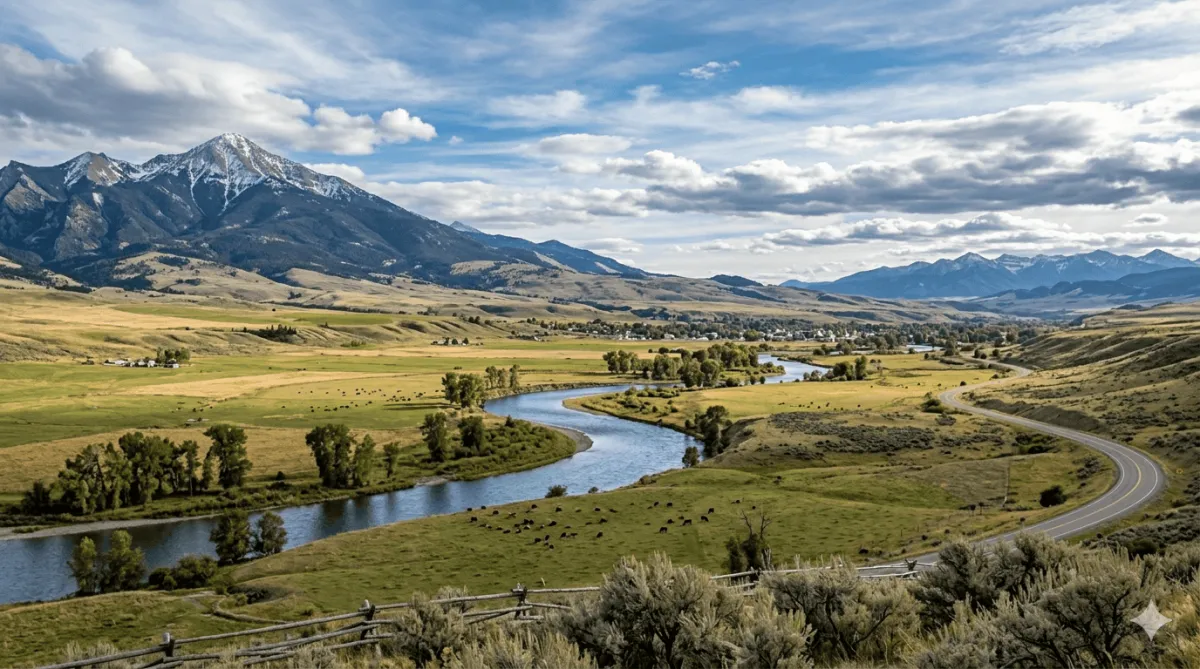
This is the corridor I work in, and it remains one of the most desirable areas in the state for buyers seeking durable long-term value. The combination of Yellowstone River access, proximity to Yellowstone National Park, mountain terrain, and a functioning local community in Livingston creates conditions that support land values over time.
Inventory is genuinely limited. Properties with strong water rights and year-round access attract serious attention when they come to market and they do not sit long. Pricing reflects that scarcity.
Gallatin County (Bozeman area)
Significant price appreciation over the past decade has reduced affordability for raw land. Buyers who were considering Bozeman five years ago now look adjacent — Park County, Carbon County, and the broader Yellowstone River corridor — to find more runway on price for comparable land quality.
Adjacent counties
Carbon County, Sweet Grass County, and Stillwater County have seen rising interest from buyers priced out of the more central markets. The land characteristics differ. The pricing dynamics differ. The driving distance to amenities differs. Each needs to be evaluated on its own terms, not as a discount version of Park or Gallatin.
Local knowledge matters more than national market data when comparing parcels across these areas, because the variables that drive value here are not uniform across the state.
Key takeaways
- Water rights, legal access, terrain, zoning, and infrastructure cost determine whether a parcel is worth owning. Not views and not price per acre.
- The variables that matter most are not visible in the MLS listing or on a drive-by.
- Infrastructure costs on raw land commonly add fifty to a hundred and fifty thousand dollars before a foundation is poured.
- A parcel suited for one use is often wrong for another. Match the land to the intended use before falling for either.
- Land due diligence is a different discipline than residential due diligence, and the wrong agent compounds every other mistake.
Frequently asked questions about buying land in Montana
How much does Montana land actually cost once everything is factored in?
The list price is only part of the cost. Raw recreational parcels in rural counties can list in the low tens of thousands per acre. Park County land with strong water rights and year-round access commands a premium. Once you add infrastructure (well, septic, electrical, road) the total project cost on a buildable rural parcel is commonly fifty to a hundred and fifty thousand above the land price before construction begins. Budget for the total, not the listing.
Can I build a home on any parcel that is zoned residential?
No. Zoning permits a use. Site conditions determine whether the use is practical. Steep slopes, poor soil, FEMA flood designations, and inadequate drainage can disqualify a parcel as a buildable site even when zoning allows residential construction. A site assessment is the only way to know before closing.
Why don’t water rights automatically come with the land?
Montana operates under prior appropriation, which treats water and land as legally separate interests. Water rights are allocated by priority date and can be sold, transferred, or excluded from a real estate sale independently of the surface ownership. Some sellers exclude water rights from the sale and many parcels never had transferable rights attached to begin with. Always confirm through DNRC records before assuming.
How is buying land different from buying a house in Montana?
Most of the relevant variables are not disclosed in the listing. With a house, the major systems already work and the buyer is evaluating finishes and condition. With land, you are evaluating whether the parcel can support what you want to build or do. Water, access, terrain, zoning, and infrastructure all need to be confirmed independently, and most of that confirmation has to happen before the offer is written, not during inspection.
How long does it take to find the right Montana land if I am being patient?
Depends on how specific your criteria are. Buyers with clear objectives, pre-established financing, and a willingness to act decisively when the right property appears are in a much better position than buyers who are still figuring out what they want. Strong properties in the Park County and Paradise Valley area do not sit on the market when priced accurately. Plan to be ready before the right one shows up.
Ready to start looking at land in Montana?
The right land purchase starts with clarity about what the parcel needs to do and a disciplined evaluation of what it actually offers. My focus is on making sure buyers understand what they are committing to before they commit, not just helping a transaction close.
That means being direct about problems, honest about costs, and clear about what separates a strong buy from a weak one in this market.
If you are considering land in the Livingston, Paradise Valley, or Park County area, I would rather have a fifteen-minute call about whether a property is worth pursuing than have you find out the wrong answer after closing. Reach out and we can talk through what you’re looking at.
Stacy Bennin is a licensed Montana real estate broker affiliated with Legacy Lands Real Estate in Paradise Valley. She specializes in land and property in the Livingston, Paradise Valley, and Park County area, with a focus on helping buyers understand what they are actually committing to before the offer is written. She uses modern tools and technology where they help clients make better decisions, but the work is local, and the priority is protecting clients from the kind of mistakes that take years to unwind. Contact her at (406) 224-3267 or visit stacybennin.com.
For a closer look, see buying Montana property from out of state. For the full breakdown, see land survey types and costs. We cover this in more detail in Montana blockchain legislation for property.
When you are ready to move from reading to looking, see how I work with buyers.
Have questions about Montana real estate?
Call or text Stacy at 406-224-3267, email [email protected], or pick a time that works for you.
